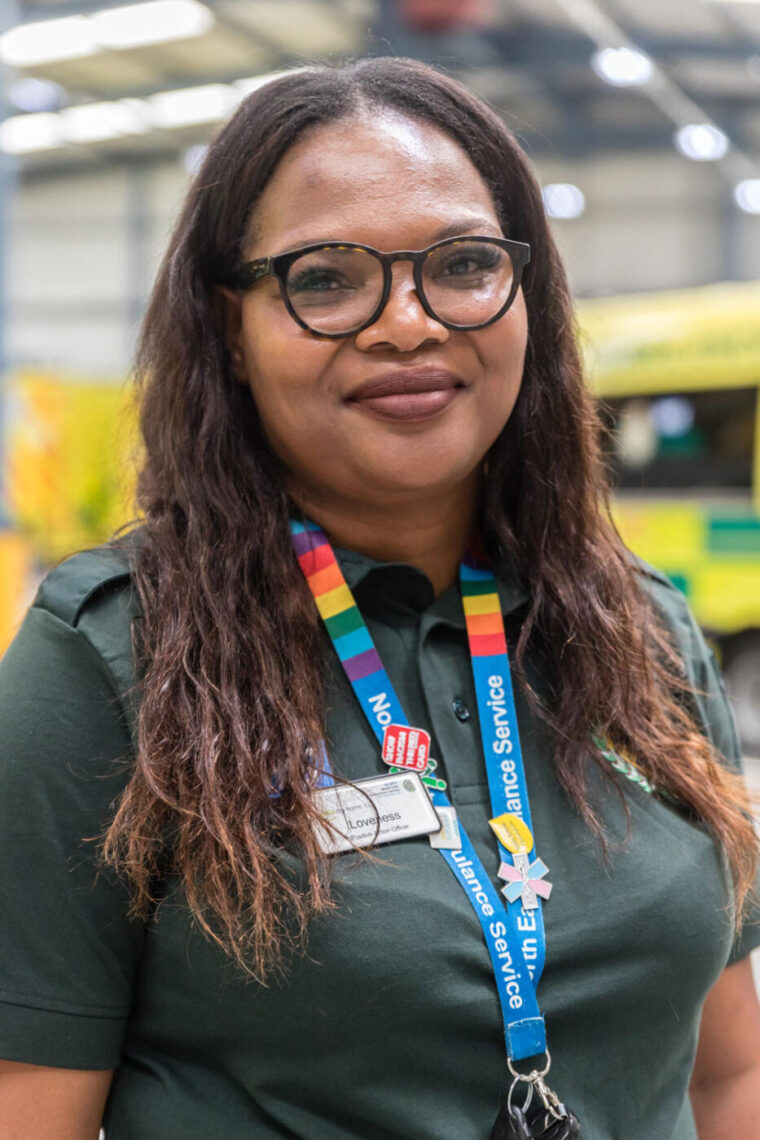
A message of solidarity from Loveness Scott, Vice Chair, National Ambulance BME Forum
In recent days, government announcements around immigration have sparked a national conversation that, understandably, may cause unease, frustration, or distress – particularly for our Black and Minority Ethnic (BME) colleagues, their families, and communities.
The National BME Forum stands in full support of all BME staff, as well as anyone affected by these developments.
We recognise that public rhetoric – especially when it marginalises communities or fails to challenge discrimination – can have real consequences. It can create environments where harmful stereotypes are reinforced, where exclusion becomes more likely, and where racism is allowed to take root.
Recent political language around immigration, ‘woke culture,’ and law and order has been echoed in social media and other spaces, sometimes co-opted by individuals and groups with far right or discriminatory views. This has led to a rise in harmful narratives portraying migrants and people of colour as threats to social cohesion – rhetoric that can deepen divisions and inflict lasting harm.
Why active bystandership matters
Now more than ever, it is vital that we come together and support one another – not only as colleagues, but as allies and upstanders. Words have power, and so does our silence.
Choosing to be an active bystander means choosing to stand up against bullying, racism, and exclusion in all its forms.
Here’s how we can all contribute:
- Stand up against racism
When we hear or witness harmful comments or behaviours, we must not ignore them. Speaking out – whether on social media, at work or in our communities, sends a strong message that discrimination will not be tolerated. Challenge stereotypes when you hear them. Support colleagues who may be affected. Our silence can be mistaken for agreement.
- Amplify BME voices
Make space for the experiences and perspectives of BME colleagues. Listen deeply and without judgement. Where possible, use your voice and position to ensure BME voices are heard – especially in spaces where decisions are made. Share stories, highlight contributions, and be intentional about inclusion.
- Engage in active anti-racism
Being non-racist is not enough; we must be anti-racist. This involves unlearning biases, educating ourselves and others, and holding ourselves accountable. Support BME staff networks, celebrate achievements and be prepared to call out bullying, harassment and microaggressions – however subtle they may seem.
- Create safe spaces
Psychological safety is essential. Encourage environments – whether formal or informal – where colleagues feel safe to express their lived experiences without fear of dismissal or retaliation. We all have a role in creating workplaces that are genuinely inclusive, supportive, and equitable.
Together, we can foster a culture that uplifts and protects every member of our workforce.
With solidarity and compassion.
Loveness Scott
Vice Chair, National Ambulance BME Forum
If you have been affected by recent events or need someone to talk to, please reach out to your line manager, a trusted colleague, or contact The Ambulance Staff Charity (TASC) on 0300 373 0898 for confidential support.
For more information about the National Ambulance BME Forum visit https://nabmef.uk/