By Hilary Pillin, UEC Strategy Advisor, AACE

On 03 July 2025, the government launched its long-awaited 10-Year Health Plan, ‘Fit for the Future’ – a vision to improve the health of the nation, not just the NHS.
Following extensive public and health sector engagement, the plan marks a turning point in how healthcare is conceptualised, prioritising prevention, digital transformation, and community-based care.
Strategic shifts
The plan aims to deliver three system-wide changes:
- From hospitals to community services.
- From analogue systems to digital solutions.
- From treating sickness to preventing ill health.
To enable these shifts, reforms will be delivered via:
- A new operating model.
- A commitment to transparency.
- A future-focused workforce strategy.
- A reshaped innovation framework.
- A revised financial approach.
 Focus areas
The plan calls for renewed emphasis on quality of care, tackling health inequalities, and developing neighbourhood health services as local anchors of care. While light on prescriptive targets, it sets out a mindset shift in how healthcare is governed, commissioned and delivered.
Implementation guidance is expected to follow in phases – short, medium, and long-term.
Notably, 2026-27 planning guidance is anticipated this autumn, signalling an earlier-than-usual start to operational changes.
Early action
Progress has already begun:
- Work is underway to reconfigure Integrated Care Boards (ICBs).
- Dr Penny Dash’s review of patient safety is complete, streamlining oversight and reinforcing the roles of the National Quality Board and the CQC.
- On 09 July, the rollout of neighbourhood health services began, prioritising England’s most deprived communities.
 Alignment with the ambulance sector vision
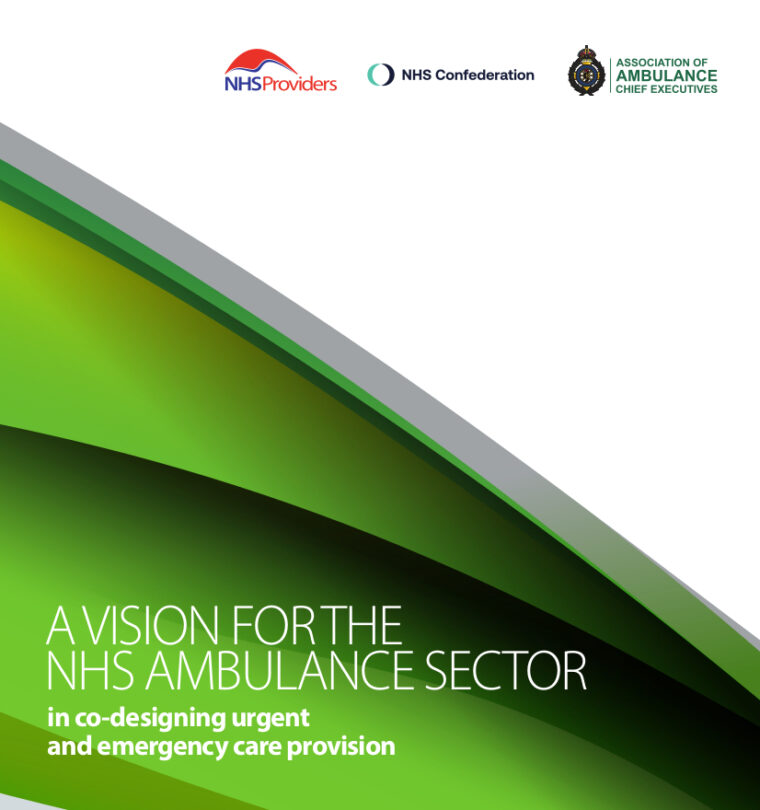
AACE’s ambulance sector vision (March 2024) aligns closely with the 10-Year Health Plan. Together, the documents outline a transformation strategy for Urgent and Emergency Care (UEC), with shared priorities including system integration, prevention and patient empowerment.
Key synergies:
- Community-centred care
- The “hospital to community” shift reflects the ambulance sector’s role as coordinators and navigators for out-of-hospital care.
- Both prioritise treating patients at home or locally, avoiding unnecessary hospital admissions.
- Digital integration
- The NHS App as a “front door” complements the ambulance sector’s ambition for integrated 999/111 and interoperable systems.
- Questions remain on how the NHS App will link to clinical input and the single patient record – for example, could it offer updates from 999/111 via messaging?
- Prevention and population health
- The shift from sickness to prevention aligns with ambulance services’ growing role in identifying health risks and shaping targeted interventions, as seen in NWAS’s hypertension work with primary care.
- System leadership
- The emphasis on collaborative, devolved leadership mirrors the ambulance sector’s push to become system leaders in UEC.
- Their 24/7 reach and visibility position ambulance services ideally for regional and local coordination.
Operational opportunities
The ambulance vision offers practical pathways to deliver the plan’s goals:
- Neighbourhood health centres could interface with urgent unscheduled care coordination hubs (UUCCHs), where ambulance services anchor care access and navigation.
- Clinical assessment services and UUCCHs support cross-sector, multidisciplinary working.
- Integrated 999/111 services enable digital-first navigation, interoperable with local coordination hubs.
Next steps
AACE has issued an initial statement of support for the 10-Year Health Plan and will publish a more detailed formal response later in summer, based on further sector-wide feedback.
Together, the 10-Year Health Plan and ambulance sector vision present a unified, forward-facing strategy. It is an exciting time and ambulance services are poised to evolve – from being emergency responders to mobile care providers and strategic UEC coordinators – while upholding their core purpose and expanding their impact.
For more information, contact hilary.pillin@aace.org.uk