Keeping Pace readers know better than anyone that ambulance crews face some of the most demanding and emotionally charged situations in the NHS. Now, a new national toolkit is set to make a real difference to how colleagues are supported in the aftermath of major, complex or distressing incidents.
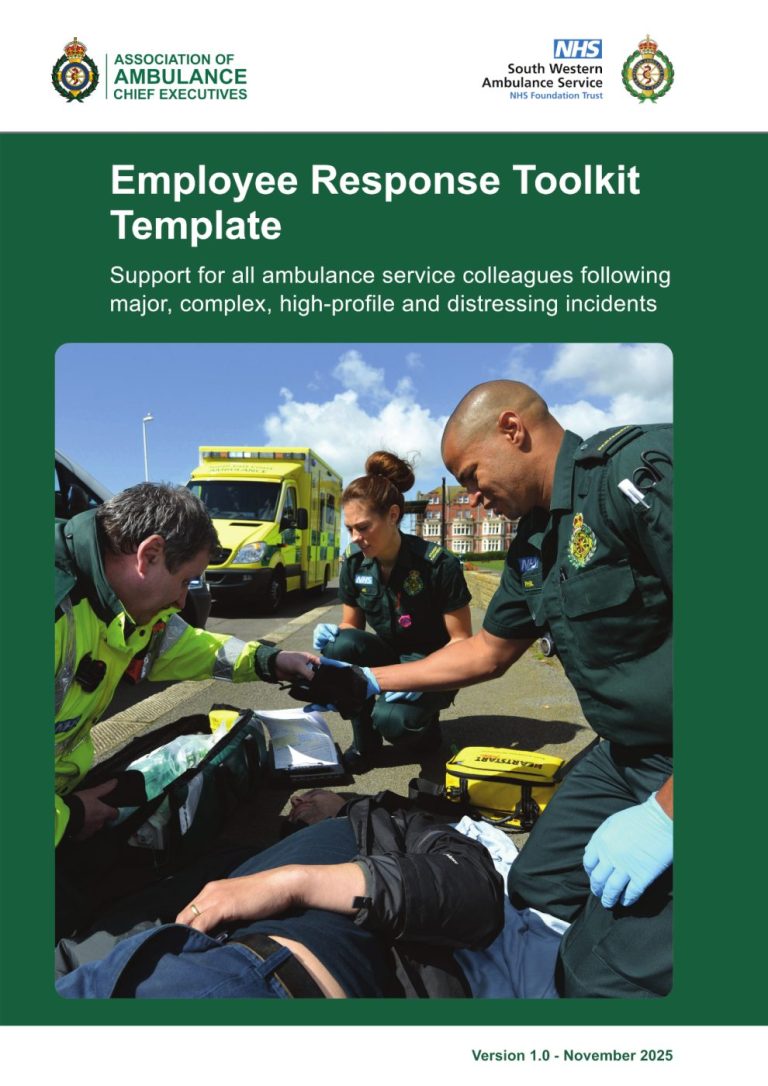 Launched in November, the Employee Response Toolkit Template was originally developed by South Western Ambulance Service NHS Foundation Trust (SWASFT) and has now been adopted into the AACE portfolio. This means every NHS ambulance trust can tailor and roll out the framework to support their own workforce.
The toolkit marks a major step forward in AACE’s commitment to compassionate leadership and psychological safety across the sector. It reinforces the message that mental health support isn’t an optional extra, but a core part of professional practice for everyone working or volunteering in an ambulance service.
Created by Sasha Johnston, SWASFT Senior Academic Support Lead and Research Paramedic, and Lauren Dunn, Head of Wellbeing and Occupational Health, the toolkit draws directly on the lived experiences of SWASFT colleagues and the expertise of the trust’s Staying Well Service.
It offers a clear, evidence‑informed structure for supporting staff in the hours, days and months after difficult events — whether a major multi‑agency incident or a quieter, deeply personal call that stays with you long after the shift ends.
AACE Managing Director Anna Parry said:
This is the first nationally available resource of its kind, marking real progress in how ambulance services support their people after potentially traumatic events. Designed for all roles, it ensures timely, compassionate and consistent care.
More than guidance, it reflects a sector‑wide commitment to psychological safety, learning and wellbeing.
What the toolkit aims to deliver:
- Early intervention to reduce long‑term psychological harm
- Resilience‑building strategies to help colleagues recover and return with confidence
- A supportive culture where seeking help is normal, not exceptional
- Reduced absence and improved presenteeism through proactive care
- Legal and ethical assurance aligned with Health and Safety Executive guidance (2024)
- Learning from experience by embedding staff feedback into future responses
- Alignment with NHS values, including the Safe Learning Environment Charter
Reflecting on the development process, co‑author Sasha Johnston said:
This framework was co‑produced with colleagues who shared their experiences of responding to high‑profile and distressing incidents. Their insight shaped a practical guide that supports staff immediately after an event and throughout the longer journey of recovery as memories resurface through media, inquests or hearings.
We’re proud to see it adopted nationally so no colleague is left to cope alone.
The SWASFT version of the Employee Response Toolkit Template is available now.
Wellbeing leads can request a trust‑branded version from carolyn.standen@aace.org.uk, and colleagues can access their local version through their trust’s wellbeing team.