By Chaz Dheensa, HR Manager, WMAS
 My name is Charanpreet (Chaz) Dheensa and I am a HR Manager for West Midlands Ambulance Service University NHS Foundation Trust. As a HR Manager for our Trust and the organisational lead on anti-racism, I am committed to creating a workplace where every colleague feels safe, respected and valued.
My passion lies in educating our workforce and leaders on what it means to actively work towards becoming anti-racist, recognising that the effects of racism – both inside and outside the workplace – can be harmful.
In the current national landscape marked by heightened tension and increasing racially motivated incidents, our Trusts anti-racism journey is more important than ever, and this is why I have created a new guidance tool to equip our managers with direction on how best to support our workforce.
“WMAS Guidance – Supporting Staff Through Incidents of Racism”
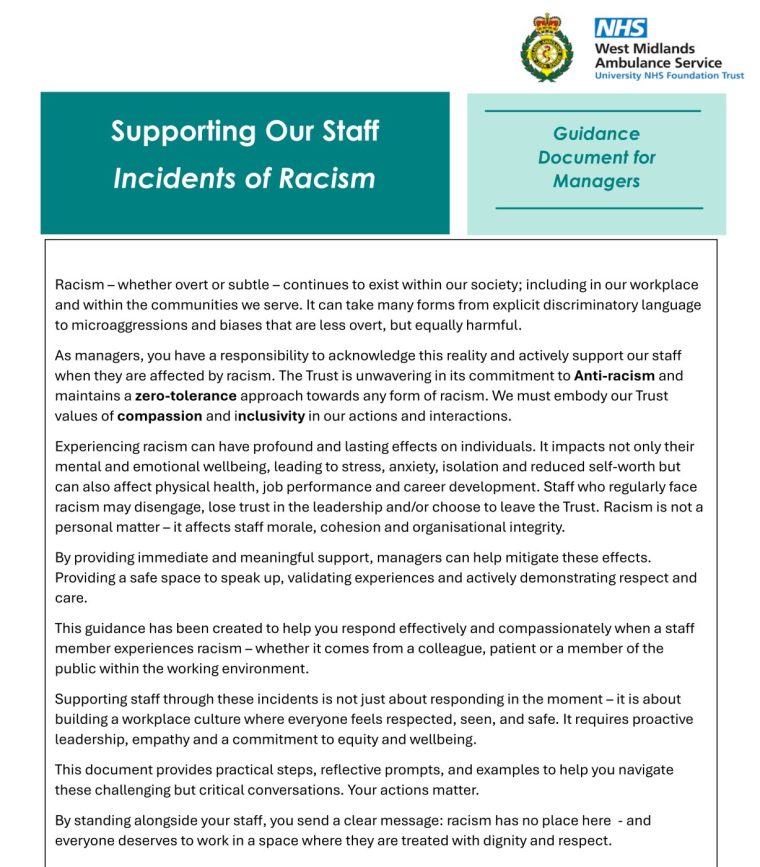 In September of this year, our Trust launched an updated guidance document designed to help managers and leaders respond effectively, compassionately and consistently when staff experience racism. The resource marks a significant step in strengthening our commitment to anti-racism, compassion and inclusivity – values that are essential not only to our organisational culture, but also to the wellbeing of our workforce.
The release of this guidance came at a time of increasing national tension. Across the UK, public debate surrounding immigration and nationalist sentiment has intensified and we are seeing tensions within our communities. Unfortunately, this climate has also contributed to a rise in racially motivated incidents in public settings – including racist attacks against NHS staff.
These incidents of racism can deeply affect morale, psychological safety and retention, while creating environments where people feel isolated, undervalued or unsafe – the opposite of what the NHS stands for.
Why this guidance matters
Racism – whether overt or subtle, has a lasting impact on mental and emotional wellbeing. It can lead to anxiety, stress, reduced self-worth and can hinder job performance and progression. When staff experience racism and are not provided with appropriate support this can erode trust and lead to disengagement. Further to this, staff may also experience racism outside of work and the emotional impact often carries into the workplace, influencing how safe and supported they may feel.
This new guidance acknowledges the reality that racism exists, both in the workplace and within our society. The guidance is a tool to equip managers with the direction and confidence to respond proactively and compassionately when concerns or incidents of racism are raised with them, regardless of where it occurred. Whether a discriminatory incident happens within a clinical or workplace setting, or on the bus ride home, the impact is felt all the same and therefore the support provided by managers is vital. The document provides managers with practical steps, reflective prompts, and scenarios to ensure they are a step forward in being prepared to support staff through these incidents.
Supporting staff is not just about responding in the moment – it is about ensuring our leaders are building a workplace culture where everyone feels respected, seen, and safe. We know that how managers handle situations, in particular incidents of discrimination can make a lasting impact – not only for those directly affected but for the wider team and organisational culture. By responding quickly, listening empathetically and applying consistent standards, managers can play a vital role in mitigating the harmful effects of discrimination and protecting employee wellbeing.
A clear message: racism has no place at WMAS
As the national landscape within UK politics and communities remains complex and incidents of racism increase nationally, WMAS commitment to anti-racism continues and this guidance tool reflects a step forward on our journey.
We have encouraged our managers and leaders to reflect on the document and our commitment to anti-racism. The document also supports our ongoing commitment to learning, accountability and action and we have asked our leaders to engage with the document in full, apply its guidance and continue to lead with integrity to ensure we continue to create a workplace where racism has no place.
If you have questions or would like to find out more about the guidance, please contact Chaz at charanpreet.dheensa@wmas.nhs.uk