Moving beyond reporting racism to providing meaningful support
 By Sandeep Wales MBE, Quality Improvement Advisor and Co-chair of Together@NEAS Staff Network, NEAS
Nobody should come to work expecting to experience racism, yet for some of our colleagues that remains a reality. North East Ambulance Service (NEAS) recently welcomed behaviour safety and organisational development specialist Ranjit Kirton to equip managers with the skills and confidence to effectively support colleagues experiencing racism at work.
Racism is experienced differently across NEAS. A call handler may be subjected to abuse because of their accent, a frontline clinician may face racist comments while providing care, and others may encounter discrimination in workplace interactions.
Whatever the circumstance, the impact can be significant, affecting wellbeing, confidence and a sense of belonging. As an organisation committed to becoming actively anti-racist, NEAS recognised the need to strengthen how it supports colleagues when harm occurs.
We may all work for the same organisation, but we do not all experience work in the same way.
What we did and why
While policies and reporting processes are important, many leaders told us they lacked confidence in supporting colleagues affected by racism, especially where they did not have lived experience themselves. They wanted practical guidance on how to start conversations, listen effectively and respond with empathy, ensuring colleagues felt heard and that their experiences were not dismissed or minimised.
In response, the Together Network worked with Ranjit Kirton, Workplace Behaviour Innovator at The Behaviour Garage Ltd to develop and deliver a training event called “Building Confidence to Support Colleagues Affected by Racism”.
This workshop was designed to:
- Increase understanding of the impact of racism.
- Build confidence in supporting colleagues affected by racism.
- Develop practical skills to listen, validate experiences and respond with empathy.
- Encourage reflection on the cumulative effects of racism and how organisations can reduce harm.
- Strengthen allyship and inclusive leadership.
Drawing on neuroscience and trauma-informed approaches, Ranjit explored how experiences of racism and discrimination can shape individuals throughout their lives.
One of the most powerful themes was recognising the cumulative nature of harm. For many people, a racist incident can trigger memories of previous experiences and reinforce feelings of exclusion. The workshop encouraged participants to look beyond individual incidents and better understand the wider psychological impact of racism and consider the burden some colleagues may already be carrying when they come to work each day.
A key feature of the workshop was the introduction of the Five Steps of Care, a practical framework designed to help colleagues, managers and leaders provide meaningful support when someone experiences racism or discrimination.
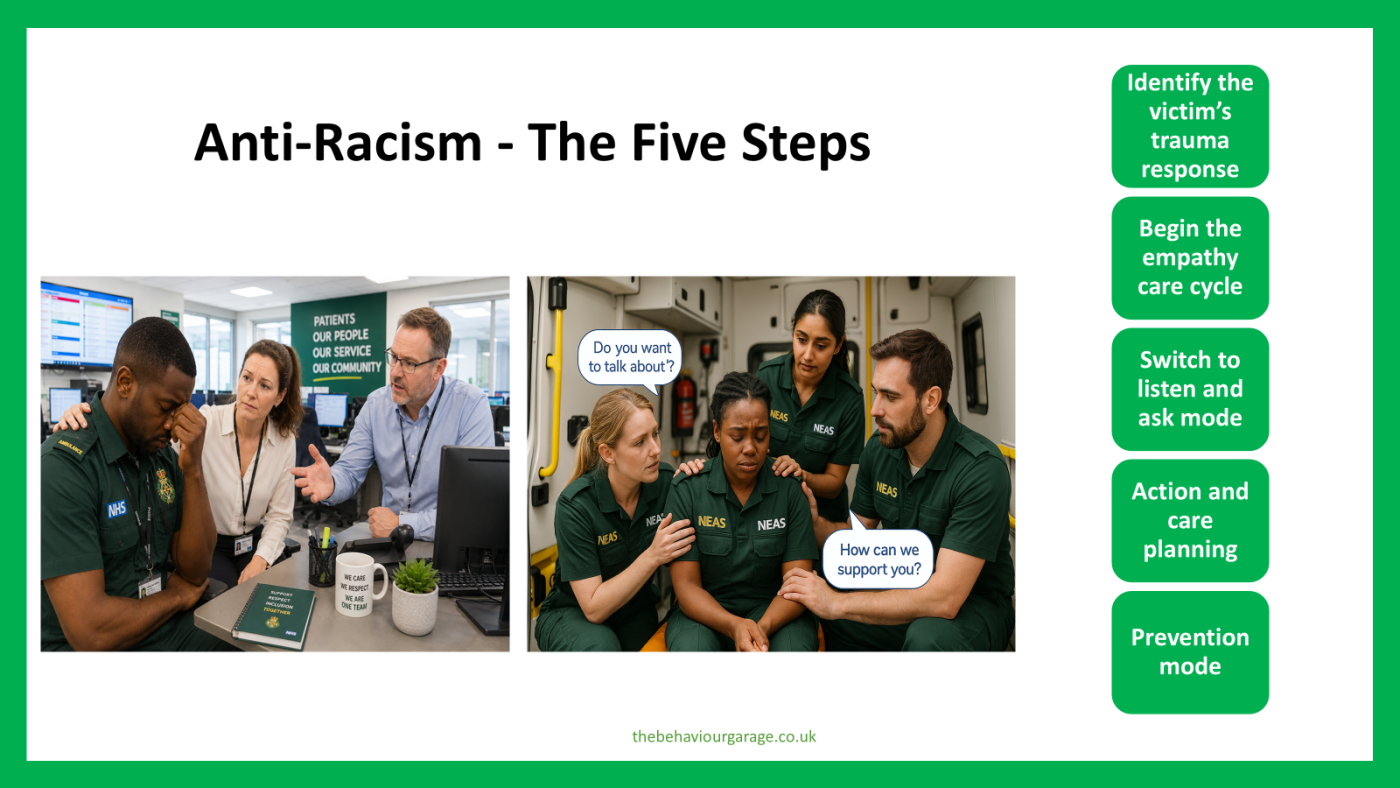
1. Recognise the trauma response
Understand that racism can trigger emotional and physiological responses that are not always visible. People’s responses will differ depending on their lived experiences, circumstances and coping mechanisms.
2. Begin the empathy care cycle
Create space for the colleague to be heard. Listen, validate their experience and avoid minimising, dismissing or trying to immediately solve the problem.
3. Listen and ask
Use supportive questions to understand what the individual needs. Focus on listening before moving into organisational processes or solutions.
4. Action and care planning
Work together to identify practical next steps, including support options, wellbeing needs and any actions the individual wishes to pursue.
5. Prevention and learning
Challenge behaviours, identify learning and take action to prevent future harm.
At the heart of the framework is a simple but powerful principle: “Offload before workload.”
Before asking a colleague to complete forms, provide statements or continue with their shift, we should ensure they have had an opportunity to process what has happened, feel heard and receive appropriate support.
Challenging normalisation
The workshop also examined how racial abuse can become normalised when left unchallenged. Participants were reminded that racism should never be accepted as part of the job.
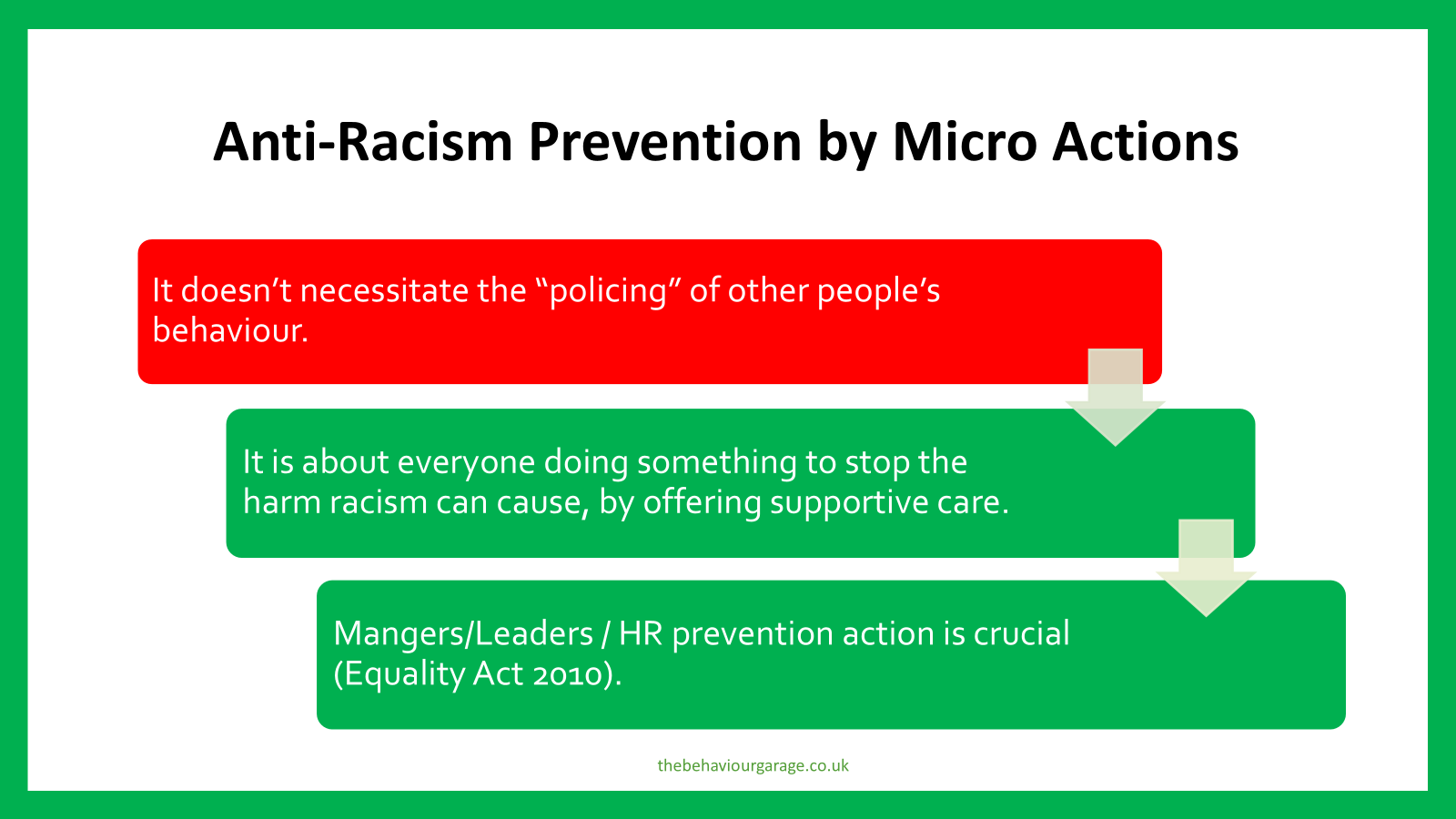
Ranjit encouraged leaders, managers and HR professionals to see themselves as “cycle breakers” with a responsibility to challenge behaviours, influence culture and reduce harm. She also introduced the concept of micro actions: small acts of support, listening and allyship that help colleagues feel seen, heard and valued.
Racism is a normalised deviance that requires meaningful anti-racism behaviour change and action. It doesn’t require us to suddenly police other people’s behaviours; it asks us all to do something, to take small actions to care.
Ranjit Kirton
What we learned
Feedback was overwhelmingly positive. Participants reported a greater understanding of racism, unconscious bias and the impact discrimination can have on wellbeing. Many felt more confident discussing racism, supporting colleagues after incidents and focusing on individual needs rather than organisational processes alone.
Perhaps most importantly, the workshop created space for leaders to stop and think.
For many of us working in ambulance services, our instinct is to help people in moments of crisis. This workshop challenged us to think about how we apply that same compassion and care when the person needing support is one of our own colleagues and showed us the importance of ensuring people experience support in the moments, hours and days following an incident.
The workshop prompted participants to reflect on whether:
- we are overly focused on process rather than people;
- we fully understand the cumulative impact of racial abuse;
- colleagues feel safe to speak up; and
- our first instinct is to support someone rather than simply ask whether they have reported an incident.
These are not always comfortable questions, but they are necessary ones.

Locality manager Louise Norris said:
“As a manager, I was keen to understand how I could improve supporting staff. The training gave me practical strategies to respond appropriately, listen without judgement, challenge unacceptable behaviour and signpost colleagues to relevant support. As a result, I feel more confident in having constructive conversations about racism.”
Katie Knapton, one of our Emergency Operations Centre (EOC) trainers, added:
“As a trainer of new health advisors, I feel it is my duty to be able to prepare them for the realities of life in the EOC at a time when incidents of this nature seem to be more frequent and worse than ever.
“I have spent a lot of time thinking about how survival responses can linger and that if an adverse experience is not handled correctly it can lead to prolonged psychological pain.
“Part of the Five Step Model focused around developing care plans that are victim choice driven. I think that sometimes we can be so keen to ensure racism is reported that we lose sight of what the victim wants and when reporting may ultimately do more harm than good. We had some interesting discussions and were offered valuable insights into identifying trauma responses and how these may present differently depending on people’s lived experiences and backgrounds.”
Mark Hunter, Call Handling Service Delivery Manager reflected:
“I wanted to understand if there was more I could do in the workplace to contribute to creating an inclusive and equitable workspace. I also wanted to show my commitment to supporting colleagues who may be impacted by racism in the workplace.
“I was most struck by the concept of not repeatedly encouraging colleagues to report and share racist incidents, as this leads them to continually relive the trauma associated with the incident.
“I would encourage anyone who line manages staff to attend the thought-provoking session. Ranjit delivers some really powerful messages, and, despite the serious subject matter, the session was engaging, insightful and enjoyable.”
Duty Officer Marie Trotter said:
“I was keen to expand my understanding of how a race-driven assault, whether verbal or physical, would affect a staff member and to make sure I was offering the best support I could. I support colleagues all the time and wanted to equip myself with the most appropriate tools so that support is beneficial and not just lip service.
“I found the discussion about psychological harm and the nervous system response particularly interesting, as I don’t think I had appreciated how much impact a verbal abuse incident could have on somebody.
“The session has increased my confidence in supporting colleagues and has made me think more carefully about the words and phrases I use when speaking to someone following an incident. I would say to anyone considering attending: do it. It gave me an insight into something I had little experience of and helped me better understand the experiences of colleagues affected by racism.”
For further information about the workshop or NEAS’s anti-racism work, please contact Sandeep Wales at Sandeep.wales@neas.nhs.uk or Ranjit Kirton at ranjit@thebehaviourgarage.co.uk