 By Darren Nelson, Organisational Development Lead, Scottish Ambulance Service
The Scottish Ambulance Service recently introduced a reverse mentoring programme focused on race and culture, creating space for conversations between senior leaders and colleagues with lived experience.
This first cohort seeks to support inclusive leadership, contributes to the ambitions of the Service’s Equality Mainstreaming Report, and begins a wider reverse mentoring programme across the equalities space.
Reverse Mentoring: listening, learning and making space for lived experience in SAS
At the Scottish Ambulance Service (SAS), we understand that improving culture depends on more than policy or good intent. It depends on being willing to listen to people’s experiences, to reflect on what we hear, and to let that learning shape how we lead. Our Reverse Mentoring Programme has been one way of creating that opportunity.
Developed through our Equality, Diversity and Inclusion Steering Group, the programme brought senior leaders together with colleagues from ethnic minority backgrounds to talk about race and culture through lived experience. The first cohort focused on racial equality, with mentors drawn from the SAS Ethnic Minority Forum, ‘Unity in Diversity’. Future cohorts of the programme will extend across the wider equalities space.
This programme links closely with the wider equalities work taking place across SAS. Our Equality Mainstreaming Report makes clear that we need to be more responsive to the needs of black, Asian and minority ethnic staff and service users. It also identifies reverse mentoring as one of the ways we can support ethnic minority staff and strengthen inclusion. More broadly, this work connects to our wider commitment to promote anti racism, improve understanding of racism, and build awareness of different cultures across the organisation.
It also connects with the wider Cultural Development Programme, where reverse mentoring sits alongside work to increase trust, strengthen connection between colleagues, encourage more sharing of ideas, and improve psychological safety to speak up. In that sense, it is part of a broader effort to create a more open, reflective and inclusive culture across SAS.
Instead of approaching this as a training exercise, the programme made space for honest conversation. Mentoring pairs met over a series of sessions, supported by an introductory conversation about expectations, confidentiality and the purpose of the programme. This was less about following a script and more about creating space for open conversation and reflection.
Having the [preparation workshop] was invaluable. It reinforced my purpose and intent and gave me the confidence to share my lived experience recognising that no experience is too small if it offers learning and insight for others. (Mentor).
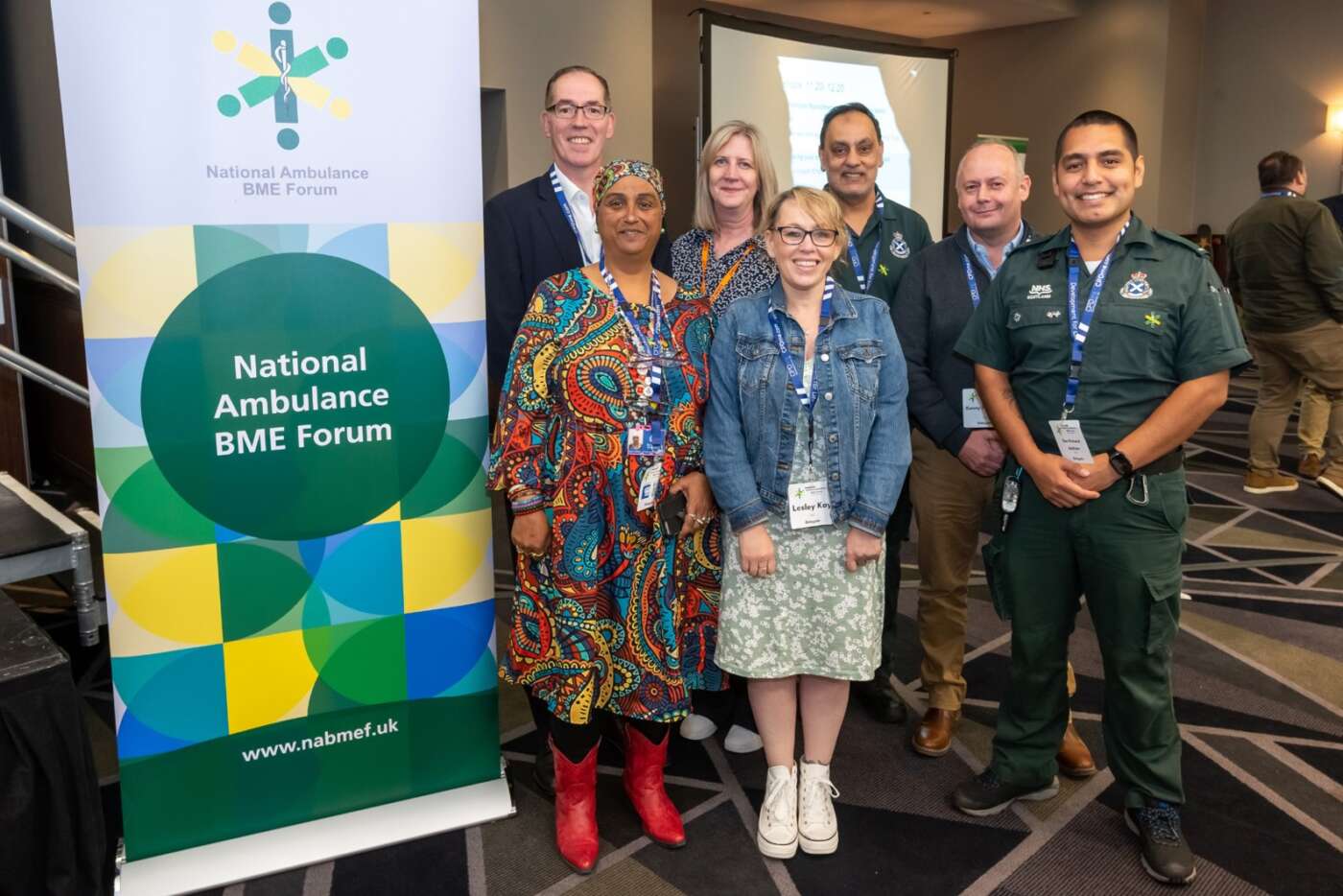
From the feedback we received, many mentors felt able to talk openly about their lived experience and felt that what they shared was heard and taken seriously.
Those who felt comfortable discussing the inequalities of their lived experience considered that their mentees were open, respectful and willing to listen throughout the sessions. Being the reflections of individual participants though, these are not findings that can be generalised across the organisation; however, they do suggest that the mentoring relationships with senior leaders felt constructive and trusted. It also gave an insight into some of the experiences of our patients and service users from diverse backgrounds.
My mentee was open and honest with their reflections and that made me feel at ease. (Mentor).
Reverse mentoring empowered me to use my voice with confidence, affirming that my lived experience has value and influence. It strengthened my sense of belonging and reinforced my purpose: to contribute meaningfully to shaping future organisational direction and policies, ensuring they reflect diverse perspectives and support a more inclusive SAS. (Mentor).
The feedback received from Mentees also reflected similar themes, describing conversations that allowed challenge without defensiveness. Others said the experience gave them insight they would not have gained through traditional training. A number also reflected on the value of hearing first hand experiences that had not previously been visible to them. Again, these are individual reflections from a small cohort, but they show the kind of learning that reverse mentoring can make possible.
We shared personal experiences that deepened mutual understanding; this was made possible by the mentees’ openness to change and genuine commitment to making a positive, lasting impact on SAS personnel. (Mentor).
Some of the strongest learning came through reflection. Mentees described hearing examples from their mentors that felt uncomfortable at times, while also recognising that discomfort as part of the learning.
One leader reflected that while they had noticed a lack of diversity when they first joined SAS, over time they had probably become blind to it. The programme created space to see this more clearly again. That was one person’s reflection, not a conclusion about SAS as a whole, but it speaks to the value of creating space where people can step back and look again at what has become normal to them.
Hearing some of my mentor’s experiences was uncomfortable…It made me reflect on why I wouldn’t challenge things in the past and how I would approach it now. (Mentee).
Feedback also suggests that participation could feel meaningful as a means of personal development. Some mentors described growing in confidence and feeling more strongly that their lived experience had value. Others reflected on the importance of being able to talk openly about issues that are often left unspoken, and on the potential for those conversations to shape wider organisational thinking. Those reflections matter because they point to the value of creating space where lived experience is not only heard but taken seriously.
It shocked me a fair bit and I have learned that I need to be more aware if my unconscious biases and seek to know more about the real challenges of immigration and racism in this country. (Mentee).
There is also some early indication that the programme has the potential to influence future leadership behaviours. Within the mentee feedback, some participants described actions they had already taken, or intended to take, as a result of the programme.
These included encouraging colleagues to engage with staff networks and reflecting more carefully on how to respond to discriminatory behaviour. It would be too strong to claim wider behavioural change from this small set of responses alone, but the feedback does suggest that some leaders are beginning to connect reflection with action.
I think we need to raise more awareness of all the networks for front-line staff. I’m not sure how we do this given the pressures in the system, but I do think through education and hearing about these stories we can change attitudes. To actually listen and hear the impact that can have is very humbling and quite emotive. (Mentee).
As a first cohort, the programme has also offered practical learning for the future. Both mentor and mentee feedback suggest that preparation was valued, particularly where it helped people approach difficult conversations with clarity and confidence. Some mentors also felt that a little more structure at the beginning would have helped them shape sessions and identify the experiences they most wanted to share. Others highlighted the value of making the programme more visible across the organisation. Those are useful lessons as the work develops with future cohorts.
It is important to be careful about what this first cohort can and cannot tell us. The feedback reflects the experience of a small number of participants. It does not speak for the whole organisation. What it does offer is evidence that reverse mentoring can create space for listening, reflection and learning, and that this can support the wider direction already set out in SAS policy and strategy.
That includes the commitment to be more responsive to black, Asian and minority ethnic staff and service users, to strengthen equality mainstreaming, and to build a culture where people feel valued and able to speak up.
This first cohort matters for two reasons. First, it has offered a practical way of bringing lived experience into leadership learning. Second, it marks the beginning of a wider programme of reverse mentoring across the equalities space in SAS. Future cohorts are intended to extend beyond race and culture to include other protected characteristics, so that a broader range of lived experience can continue to inform leadership development and organisational learning.
In that sense, this is not really about a single cohort on its own. It is an early step in a wider piece of work to listen more carefully, learn more honestly, and build a more inclusive culture over time.
For further information contact shyamali.das-bharadwa@nhs.scot
Please share this page with your networks.